
Micro Tese
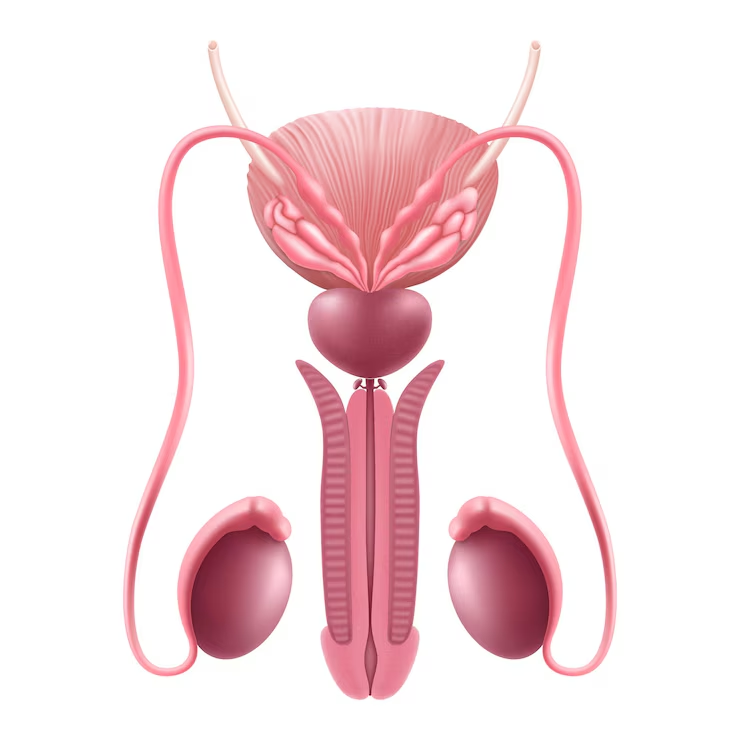
Micro Test, or micro-TESE, is a specialized microsurgical procedure used to retrieve sperm directly from the testes in men who have no sperm in their ejaculate (non-obstructive azoospermia). Under high magnification, tiny samples of testicular tissue are dissected to locate pockets of sperm production, which are then extracted for use in assisted reproductive techniques like ICSI. This targeted approach maximizes sperm yield while minimizing tissue damage.
- Overview
- Procedure
- Cost of Treatment
- Why Choose Abirbhav Infertility Care?
- FAQs
Microdissection Testicular Sperm Extraction (micro-TESE), often referred to simply as “Micro Test,” is a microsurgical technique designed to retrieve sperm directly from the testes in men who produce no sperm in their ejaculate (non-obstructive azoospermia). Unlike standard testicular biopsy, micro-TESE employs an operative microscope to identify tiny clusters of active sperm production within the testicular tissue. By precisely targeting these islands of sperm, micro-TESE maximizes the likelihood of sperm retrieval while preserving as much healthy tissue as possible. The sperm extracted through this procedure can then be used in advanced assisted reproductive techniques such as Intracytoplasmic Sperm Injection (ICSI).
- Anaesthesia Preoperative Evaluation:
Patients undergo a comprehensive evaluation, including hormone profiling, genetic testing, and scrotal ultrasound, to confirm suitability for micro-TESE and rule out factors that might compromise outcomes. - & Preparation:
The procedure is performed under general anaesthesia. The scrotum is sterilized, and a small midline incision is made in the scrotal skin to access the testicular tunica. - Microsurgical Exploration:
Using a high-powered operating microscope (up to 25× magnification), the surgeon carefully opens the testicular tunica albuginea and examines the seminiferous tubules. Tubules that appear larger and opaquer—indicating active sperm production—are selectively extracted. - Tissue Processing:
Retrieved tissue samples are handed to the embryology team, who mechanically and enzymatically process the specimens to isolate viable sperm. Any healthy sperm found are cryopreserved or prepared immediately for ICSI.
Closure & Recovery:
Once sufficient tissue is harvested; the tunica and scrotal incision are meticulously closed. Patients typically go home the same day or after an overnight stay, with minimal pain managed by short-term analgesics.
The cost of micro-TESE varies according to several factors, including anesthesia type, operating room fees, surgeon and embryology team expertise, and the extent of postoperative processing and cryopreservation. While it represents a higher investment than conventional sperm retrieval methods due to its microsurgical precision and specialized equipment, micro-TESE often reduces the need for repeat procedures by improving sperm retrieval rates. At Abirbhav Infertility Care, we provide transparent, itemized estimates during your consultation and offer flexible payment plans and financing options to support your treatment journey.
- Microsurgical Expertise: Our lead surgeons are highly trained in urologic microsurgery, with a proven track record of successful micro-TESE procedures.
- State-of-the-Art Facilities: We employ the latest surgical microscopes and advanced embryology laboratories to ensure the highest sperm retrieval and survival rates.
- Comprehensive, Personalized Care: From initial evaluation through postoperative follow-up, each patient receives a tailored plan that addresses both medical and emotional needs.
- Integrated Reproductive Services: Retrieved sperm are processed on-site for ICSI by our experienced embryologists, offering a seamless transition to fertilization and embryo development.
Supportive Environment: Our multidisciplinary team—including urologists, reproductive endocrinologists, and counsellors—provides compassionate guidance at every step.
- Who is a candidate for micro-TESE?
Men diagnosed with non-obstructive azoospermia—often due to testicular failure, Klinefelter syndrome, or prior chemotherapy—are prime candidates when conventional retrieval methods have failed. - How does micro-TESE differ from standard TESE?
Micro-TESE uses an operating microscope to selectively extract seminiferous tubules most likely to contain sperm, whereas standard TESE samples tissue more randomly, often requiring larger biopsies and yielding lower sperm retrieval rates. - What is the success rate of micro-TESE?
Success rates vary but generally range from 50–70% for finding viable sperm in men with non-obstructive azoospermia, significantly higher than conventional biopsy methods. - Is micro-TESE painful?
The procedure is performed under general anaesthesia, so there is no pain during surgery. Postoperative discomfort is typically mild to moderate and managed with oral analgesics. - How long is recovery?
Most men resume light activities within 48 hours and full activities, including exercise, within two weeks. Swelling and mild discomfort are common but resolve quickly. - What happens to unused testicular tissue?
Any residual tissue containing viable sperm is cryopreserved for future ICSI cycles, reducing the need for repeat procedures. - Does micro-TESE require a female partner’s cycle synchronization?
Not necessarily. Sperm can be frozen, allowing flexibility in timing the partner’s ovarian stimulation and embryo transfer cycles. - Are there any risks?
Complications are rare but can include scrotal hematoma, infection, or temporary testicular swelling. Risk is minimized by precise microsurgical technique.